The island of Bermuda was settled in 1612. The island sits upon a limestone dome of an ancient volcano. The first settlers quickly found that there is no natural source of water on the island, rain disappeared instantly into the porous limestone, it mixed under the ground with seawater and was undrinkable, and their “British” style thatched roofing was quickly torn away by fierce windstorms and hurricanes.
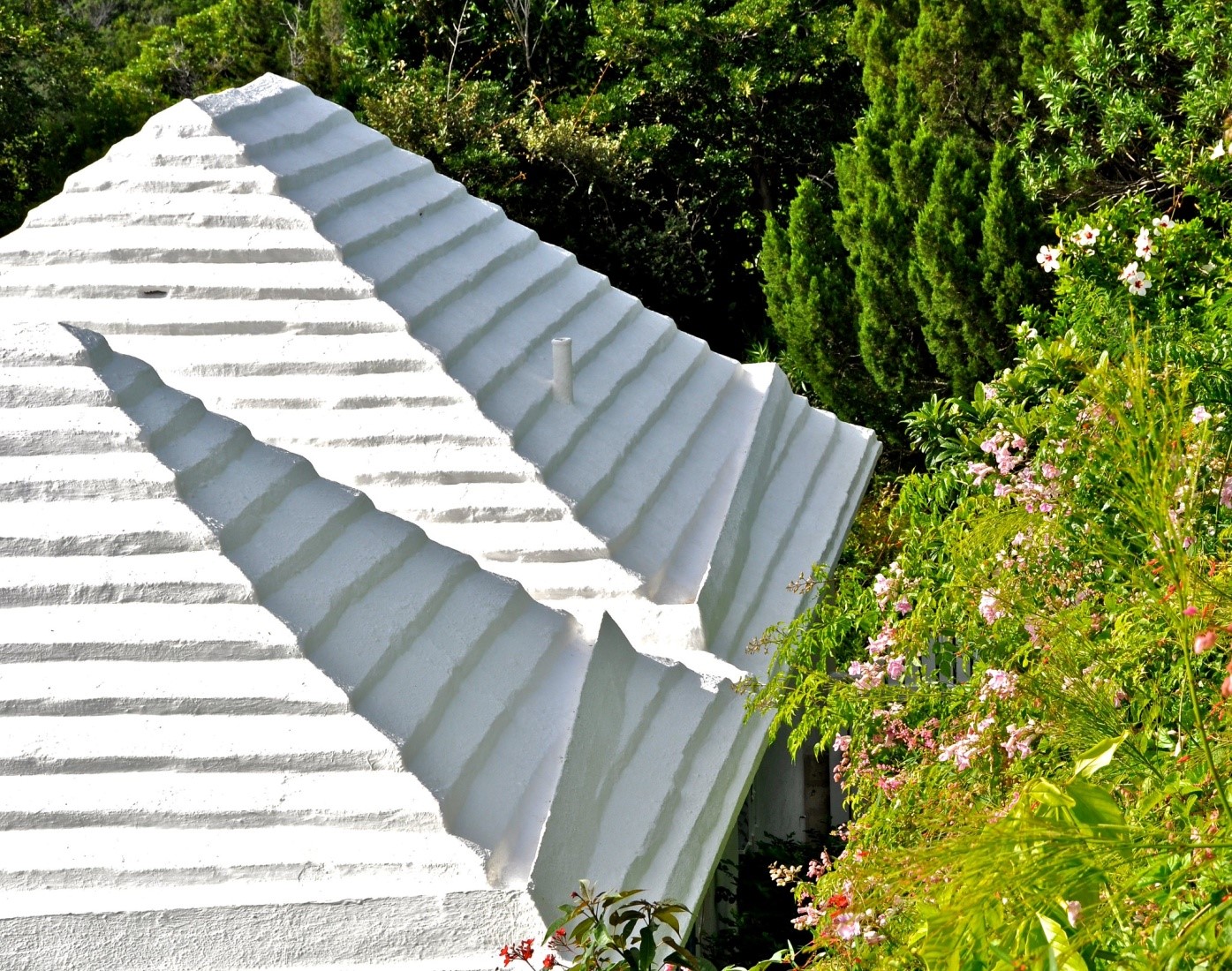
In search of a way to harvest the rain water that fell on them the settlers used available limestone to create a unique roof that provided water and resisted the roof threshing winds.
First you build a strong wooden roof from the native cedar trees, overlapping the ends so that a slope is created by the wood… then you lay slabs of limestone on top, which follow the slope of the frame. In this way, the sloping steps of the roof design catch the blowing rain, slow it down, and direct it to underground water cisterns.
At the same time the steps of the roof design disrupts the wind shear effect with turbulence and thus almost nullifies the “lifting” effect of the wind on the roof. As a bonus, the white lime based coating spread on the roofs provide for a waterproof covering and when combined with sunlight provide a natural antimicrobial property – similar to running our water through an ultraviolet light system to sanitise it for drinking.
For decades, Island residents have been required to harvest 80% of all the rain that falls on their roof. Imagine that this rainwater is your only water. There is no municipal water service, no wells, no streams or hauled water tankers to supply your home. Yet Bermuda thrives.
While piped water systems all over the world are facing restrictions and falling supplies, Bermuda show us that rainwater harvesting can indeed provide a supply of drinkable water for everyone, if that is, everyone participates in the conservation attitudes that Bermudians have practiced successfully for more than four hundred years.
You can read the whole story here.

